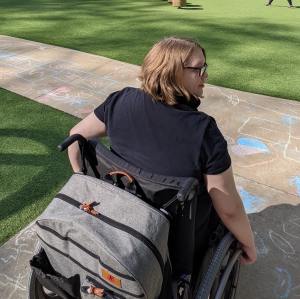
The weather was lovely and sunny the other day, which meant picnic in the park! My caregiver brought some chalk and bubbles with us – and a lot of the children there (and parents!) decided they wanted to join in.
None of the kids were bothered by me using AAC, or even my wheelchair. In fact, they were fascinated with my assistive devices.
When I go out in public, I never know how people are going to react to my AAC device or my disabilities in general.
Often, there are stares – some out of curiosity, others out of pity or annoyance. Sometimes people whisper and point, as if I somehow don’t notice.
Today, that wasn’t the case.
I had children come up to me and ask if my “computer” can say the word dinosaur, and ask for the computer to tell them my name. I had kids come up to me and show drawings they had made for me.
Instead of wondering what was wrong with me, they were more interested in just being in the moment – enjoying a simple sunny day at the park.
It didn’t matter to them that I didn’t speak. Instead, they were more excited about some of the tricks I did in my wheelchair, and beamed with pride when I complimented their chalk art.
The part that stuck with me the most was something a little girl said at the end of the day. As I typed to say goodbye, she stopped her mom who was walking away – and said “wait, she’s typing something!”
This is something that I can’t even seem to get some professionals to grasp. The concept of waiting for me to communicate? They find it burdensome. They want to rush the interaction, moving off before I’ve finished typing or simply ignoring what I say.
Meanwhile, the kindergartner got it right. She saw how I communicated, and made sure my words were heard. All of the children listened to my words, even waiting patiently when I composed my messages.

_
If young children can grasp the idea of inclusion and acceptance, why can’t the adults?
It makes you wonder how disability becomes stigmatized.
Where does that radical acceptance go?
And how do the adults get it back?
_
 Just Keep Stimming