With the current conversation around Section 504 and Olmstead at the federal level, this felt necessary.
I’ve written previously about home and community-based services (HCBS), both in positives and where it falls short. Consider this a companion piece.
Like most people, I hate to admit needing help. And also like most people, I can be a bit stubborn about asking for it.
Asking for help is generally seen as a sign of weakness in our society. Our culture is heavily centered around how independent someone is, and worth becomes determined by productivity. It’s hard to not fall into that line of thinking, especially when you’re bombarded with it on a regular basis.
As an autistic person, it’s difficult to avoid internalizing it. There’s a lot of things that I either struggle with or cannot do, whether it’s due to the autism or one of my other disabilities. Disability isn’t a bad word, but it’s hard to swallow when the world treats your existence as a curse.
It’s a fine line to walk: between trying to prove your worth while simultaneously learning to accommodate that you are sometimes indeed too disabled to do things.
I have so much anxiety around the idea of being “too much work” or a burden, especially when I do ask for help.
___
Complete and total independence is a myth. It doesn’t exist – or at least, not in the traditional sense. If you’ve heard the phrase “no man is an island,” it illustrates the point well. No one exists in a vacuum. The average American is not fully self-sufficient, making their own clothes or growing all their food. We are all interdependent, connected by an invisible thread that’s interwoven into the fabric of society.
People need other people, whether we want to admit it or not. Some of us need more help than others, but that shouldn’t be seen as a personality flaw. It doesn’t make someone a “drain on the system.” It simply makes us human. Our worth isn’t determined by what milestones are hit or how “productive” we are. The inherent worth of every person lies within – not by an arbitrary metric set by society.
Like millions of Americans, home and community-based services are a lifeline for me – literally. From managing my medications (there are many) to ensuring I make it to my medical appointments, there’s a lot involved in keeping me well and functioning. Following the nutrition plan from my specialist, recognizing when something is wrong, making sure I take all my medications on time – being chronically ill is a job in itself sometimes. Having direct support professionals every day keeps me genuinely alive and stable.
That said, these services aren’t just for the bare minimum of keeping us alive. They’re meant to help us thrive in community – with the right amount of safety, supports, and resources.
___
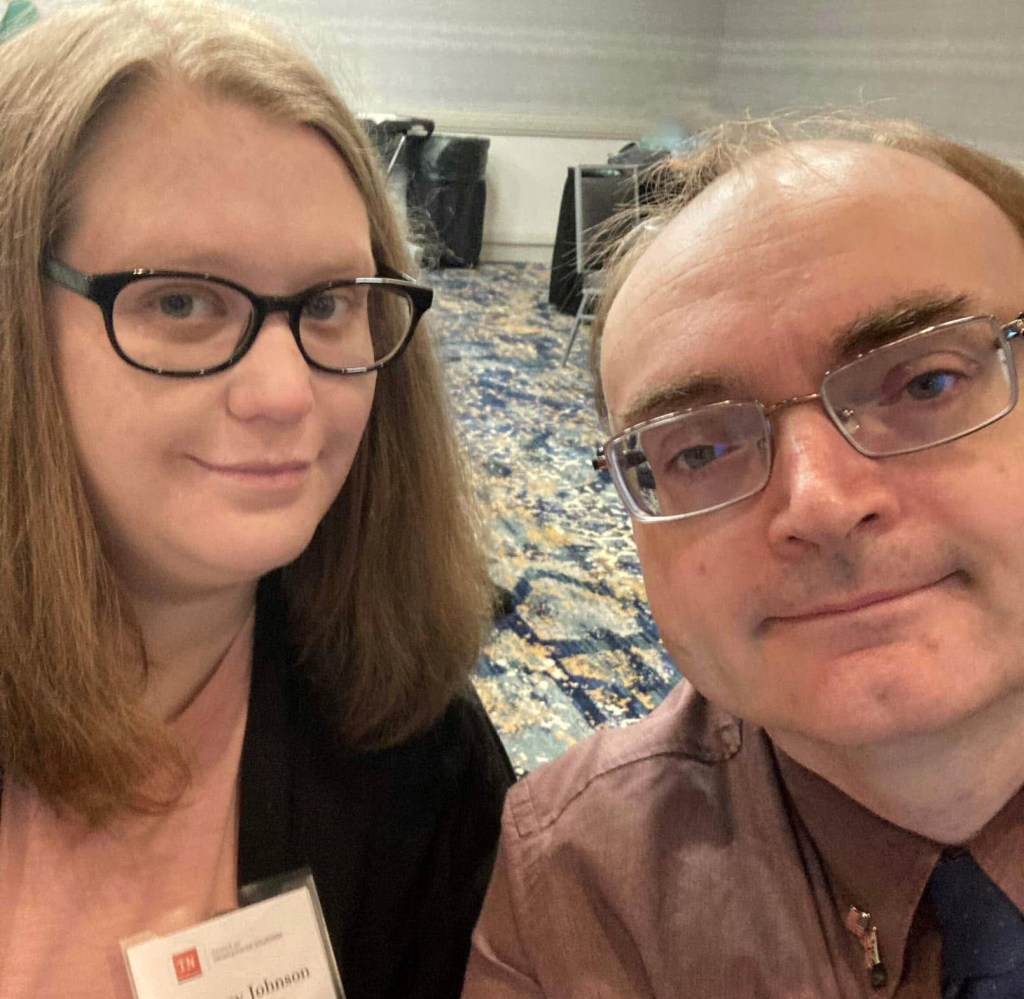
Community is not just where you live; it’s where you belong. It’s not just a house, but it’s somewhere that you are a part of. Inclusion alone isn’t enough. The true goal is to belong.
For me, community looks like my neighbors checking on me when there’s a caregiver that they don’t recognize.
- It’s going to a meeting and someone going “yay, you made it!” or “I was hoping you’d be here.”
- It’s friends coming over with cake because you’ve had a terrible day. It’s library trips, volunteering, going to vote – civic engagement.
- It’s flowers after your brother died, extended invitations without expectations, and late night outings for snacks.
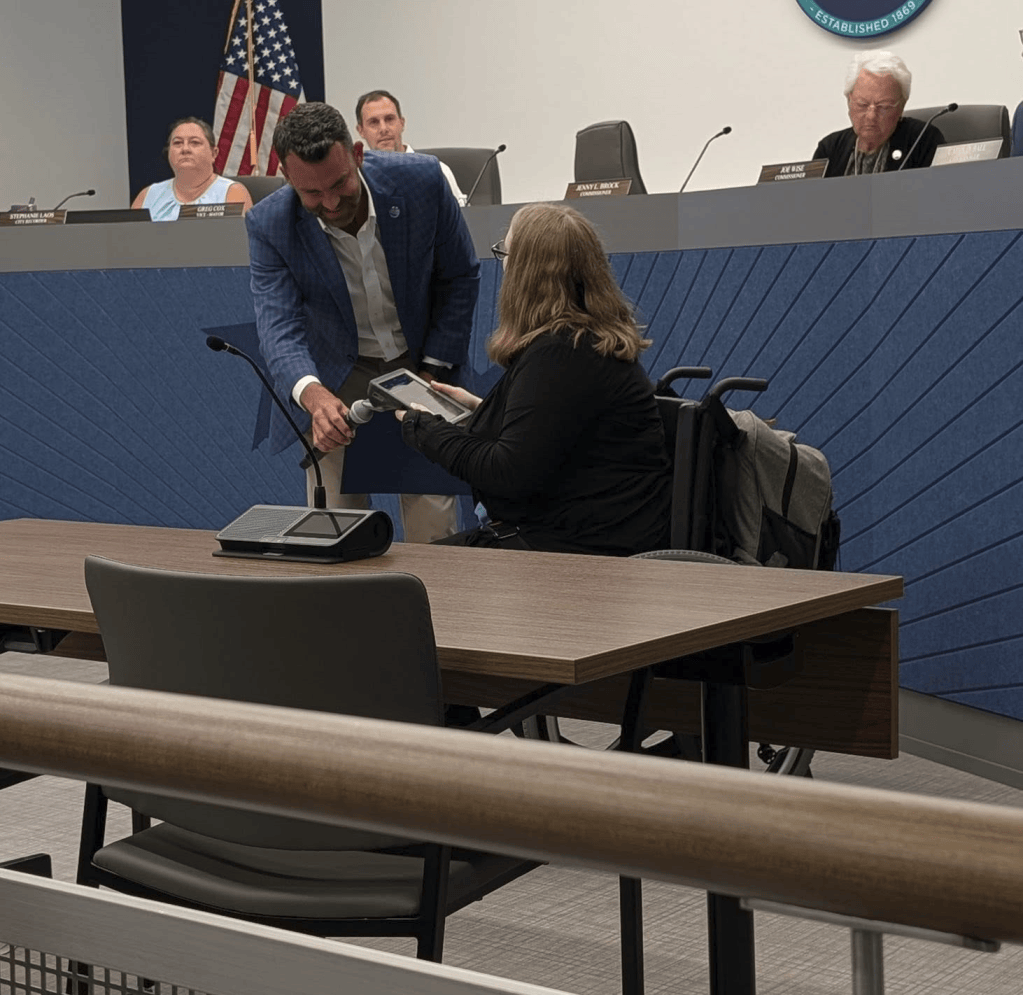
- It’s giving back, trying to make things better for the people around you. It’s advocating, not just for yourself but others too.
___
Community is living. It’s thriving and flourishing.
Home and community-based services are supposed to facilitate this. They give us an opportunity to be part of our communities, to belong. These services allow for us to be involved, whether it’s through community events or even employment. They enable us to live life on our own terms.
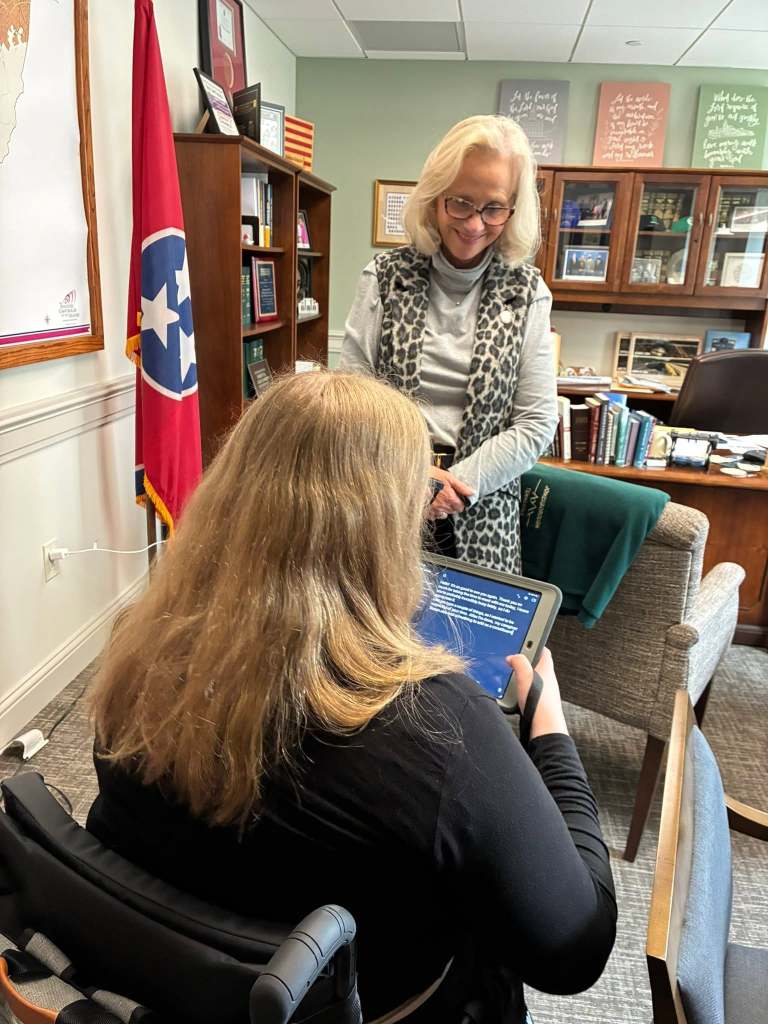
Without these services, I wouldn’t be able to live in my own apartment. I couldn’t serve on the councils that I do, give guest lectures and presentations, or meet with legislators. I wouldn’t even have a chance for employment, something that I’m working on with Vocational Rehabilitation.
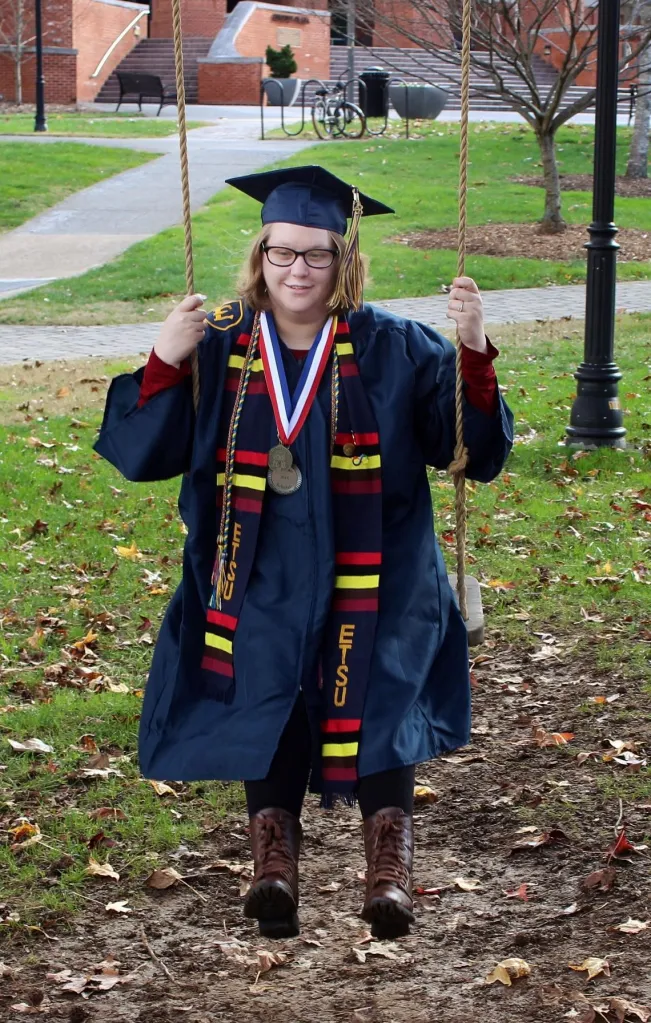
I like having my cats, hosting sleepovers with friends, and not having a curfew as a 29 year old adult. I enjoy having the ability to do hobbies like my embroidery and painting. I’m proud that I managed to graduate with my degree. If I didn’t have these supports, I wouldn’t be able to participate in the things that give me joy or meet my personal goals.
These services are critical for so many Americans with disabilities. Home and community-based services preserve our dignity, our personhood. It’s not just charity; it’s keeping people alive – both physically and mentally. People with disabilities deserve to be a part of their communities, both seen and heard. Anything less is unacceptable.
These are our communities too – and we belong.

